
Guide
What office cleaning includes: the Hayward checklist, room by room
When a Hayward office manager asks what a cleaning visit covers, the clearest answer is a tour of the suite. Here is what happens in each room on a recurring visit, what runs on a longer cycle and what the crew needs to hear from you.
Printable checklist
Entry and reception
Take an accounting firm in a San Leandro office building that sees clients most afternoons. The first room any of them sees is reception, so that is where every recurring visit starts: the front counter is cleared of dust and smudges, visitor chairs and side tables are wiped, the entry door glass is cleaned and the floor is vacuumed or mopped to suit its surface.
Small details carry the most weight here. Brochure racks, the top of the reception desk and the area just inside the door collect dust and fingerprints quickly, and they sit at eye level for anyone waiting. A lobby that looks cared for tells visitors the rest of the office is too.
Workstations and private offices
At desks, the routine is waste and recycling removal and wiping open surfaces without moving papers or equipment. Phones, keyboards and personal items stay where staff left them unless the checklist says otherwise. Private offices follow the same approach, with added attention to guest chairs and doorway glass.
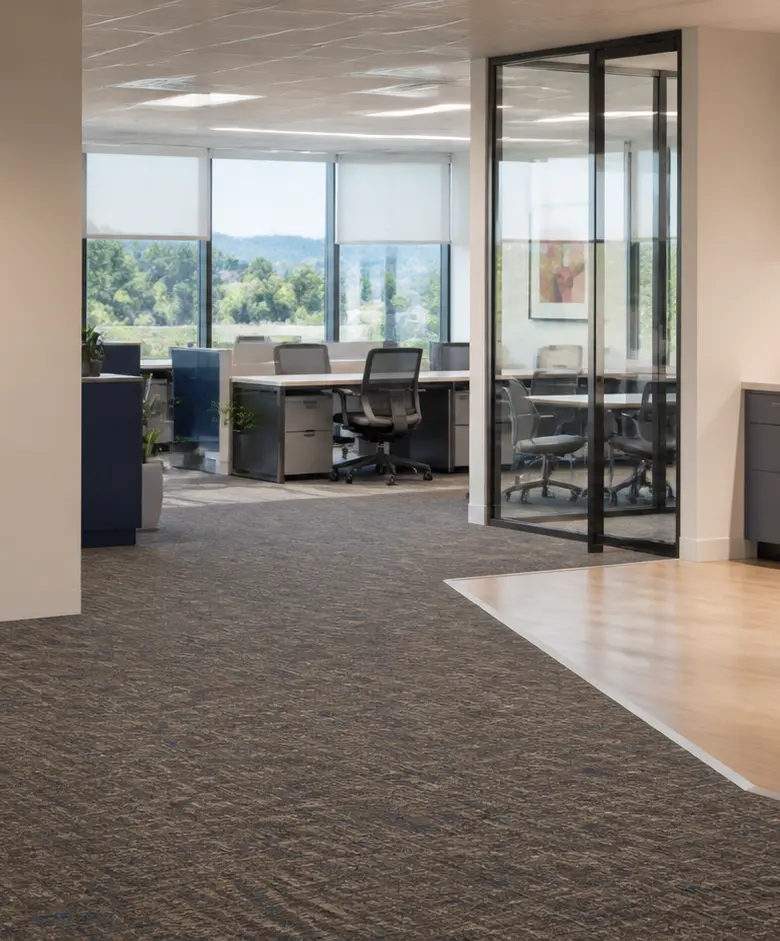
Open-plan floors take the most vacuuming because foot traffic runs between every row. Under-desk areas, the paths to printers and the spaces around shared cabinets get regular passes, while low-traffic corners rotate.
Hybrid offices in Newark often leave whole rows empty midweek. Those desks still get dusted on a rotation, but the nightly effort shifts toward the rows, kitchens and restrooms that were actually used that day.
Meeting rooms, kitchens and breakrooms
Conference rooms are reset after use: tables wiped, chairs pushed in, trash and recycling emptied, and whiteboards wiped once someone has erased them. Rooms booked for client meetings can move up the list the night before a big presentation.
Kitchens and breakrooms usually take the most time on each visit. Counters and tables are wiped, sinks are scrubbed, appliance fronts and handles are cleaned and the floor is mopped last. Microwave interiors and refrigerator cleanouts are worth settling up front, since every office handles shared food differently.
Restrooms and floors
Restrooms get a full clean every visit: toilets, urinals, sinks, mirrors, partitions and floors, with dispensers checked along the way. In a busy suite, the restroom often decides how the whole office feels to staff, so it stays on the most frequent schedule.
Floors tie the office together. Hard floors in kitchens, restrooms and the lobby are mopped with the routine, and carpet in work areas is vacuumed every visit or on a rotation that follows traffic. The floor care page explains how each hard surface is matched to the right method.
What runs on a periodic schedule
Some work belongs on a longer cycle instead of every visit. Carpet extraction with spot treatment, detail work on walls and interior glass, and kitchen stainless steel are planned for weekends or low-occupancy days, so no room closes during the week. Commercial carpet cleaning handles the extraction side.
Offices with a busy front desk can also add day porter visits during business hours, so reception and restrooms stay presentable through the afternoon while the evening crew keeps the full routine. Administrative offices inside Hayward plants and warehouses add one more wrinkle, since their breakrooms and restrooms also serve the floor; planning support spaces around shift changes covers that case.
What to tell the crew
The walkthrough that starts every quote is your chance to shape the checklist. Point out the rooms clients see, the spots that bother staff most, the desks or rooms that should be left alone and the days the office is busiest. Those details give each room its own frequency instead of one routine for the whole suite. Printing the checklist at the top of this page beforehand helps, since its Tell the crew section has a line for each of these points.
Share access details too: alarm times, doors that stay locked and rooms that hold sensitive files. When the office changes, with a new wing, more staff or a hybrid week, the checklist changes with it. The office cleaning page shows how that routine is built, and offices in San Leandro can find local details on their city page.
A few useful answers
Quick answers.
How often should each room be cleaned?
Room use sets it. Reception, kitchens and restrooms usually follow the most frequent schedule, while quiet offices and storage rooms rotate less often.
What happens at desks covered in papers?
Open surfaces are wiped and papers stay where they are, so nobody comes in to a rearranged desk.
Which tasks happen less often than every visit?
Carpet extraction, wall and glass detail work and kitchen stainless steel run on a periodic schedule, usually on a weekend or low-occupancy day.
What should an office share before the first visit?
Priority rooms, rooms to skip, access details and the days the office is busiest. The walkthrough fills in the rest.
Services